


The Evolution of League of Legends Boosting Services
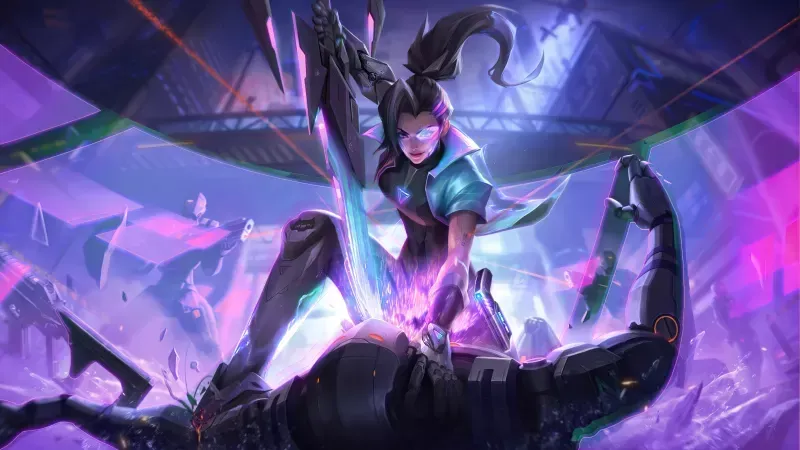
Before discussing the evolution of League of Legends boosting services, let’s jump into the history of LoL itself. LoL was released in October 2009 as a free-to-play multiplayer online battle arena video game by Riot Games. It was an inspired stand-alone game effort after the success of a Warcraft III map, Defense of the Ancients.
LoL’s Legacy
Although LoL is free to play, Riot Games makes money from players who purchase character customization through microtransactions. This profitable venture started with positive reviews and quickly became one of the most popular games played on the internet. Going into 2019, LoL regularly peaked at eight million concurrent players.
Since its launch, League of Legends has expanded with spin-off video games and additional media-based ventures such as the Arcane animated series. It is also the world’s largest brand of esports entertainment, featuring its annual League of Legends World Championship. Going into 2024, LoL continues to dominate the esports entertainment scene and massively multiplayer online gaming.
LoL Boosting Explained
League of Legends features a matchmaking rating system (MMR) that uses the Elo formula. Elo earned its name after the Hungarian-American physics professor, Arpad Emmerich Elo. It’s a rating system for two-player games (like chess) to calculate the skill levels of players in zero-sum games. The goal is to line up matches based on skill levels in zero-sum games.
Because of the intricacies of the MMR system, Elo boosting became a service provided by experienced players to help struggling players increase their rank in games. Also termed as rank manipulation, Elo boosting has one of two ways such a service can be carried out. The most common is a booster accessing their client’s account to provide the boosting service they’ve been hired to do.
Another tactic players and boosters use is through a “smurf” account. This popular online gaming term describes a newer, lower-ranked player to play ranked game matches. The smurfing route tends to be a favorite when players pay for a duo-boosting service. This way, the booster and their client play together as a team.
Elo Boosting Evolution
Elo boosting has been a practice among gamers long before League of Legends was published in 2009. In 1979, AVATAR was a multiplayer dungeon-style game that allowed forty players to participate. When it was released as a game, college campus and university computers were the only operating systems that could handle running it. Because of this, AVATAR became massively popular among the students who played it.
AVATAR was a game that punished players each time they lost or died during gameplay. This ushered in the idea of in-game currency (gold) transferred to real money so players could purchase higher-level characters. This way, they no longer had to start from scratch. It was a practice that evolved into real money trading (RMT). It later generated financial traction and became a popular form of trading after the 2004 introduction of World of Warcraft.
The evolution of Elo boosting includes the growing demand for Multiplayer Online Battle Arena (MOBA) games, including League of Legends. After LoL was launched in 2009, 2010 witnessed an increase in MOBA games. Alongside it, was the demand for boosting and coaching services by players who wanted to rise above mediocrity.
LoL Boosting Legacy
(Not just) LoL has witnessed a boosting services boom among players who want to enjoy their favorite games as much as possible. However, some don’t always have the time (and sometimes patience) to commit to the grinding required to level up. Over time, the varying forms of boosting services have evolved.
The two most popular boosting services are Elo boosting and Duo boosting. With Elo boosting, it’s a service lesser experienced players use to rank up. As for duo boosting, this is where a professional booster teams up with their client in game queues and assists them in winning ranked matches. Usually, this method involves the creation of a “smurf” account boosters use to help their client achieve their in-game goals. This method is used to work around LoL’s MMR system.
In addition to boosting services, reputable companies like Eloboost24 offer coaching. This is the ideal solution for players wanting more than what boosters have to offer. Instead of simply getting a boost whenever needed, players receive one-on-one instruction on how to play LoL like a pro.
Especially with LoL, boosters and coaches have established boosting services that can be lucrative as a business. Even as developers like Riot Games frown against such practices, the demand for boosting services continues to grow. People are competitive by nature so if they can take advantage of a service that doesn’t involve blatant cheating and hacks they will do it.
Boosting Futures
The future of boosting continues to show promise. Gaming is one of the most popular forms of entertainment worldwide and it continues to come up with ways to win over new customers and keep existing ones. And because of this, boosters and coaches will continue to serve a clientele who need their help.
While not everybody agrees with boosting as an ethical practice, it’s still a service that benefits more people than the average person realizes. Because of professional boosters who care, games like LoL have done more than just stand the test of time. They’ve flourished with new players joining in on the fun as they go up against longtime, well-established veterans who’ve been at it for years.
As Riot Games invents new ways to keep LoL’s popularity at an all-time high, boosters keep up with the demand of players who want to excel at a game they enjoy. Perhaps a day will come when boosters finally get the full credit they deserve. They’ve established themselves as an important lifeline for games like LoL to keep running without signs of slowing down anytime soon.
You might also like