




What Are Microtransactions in Games?
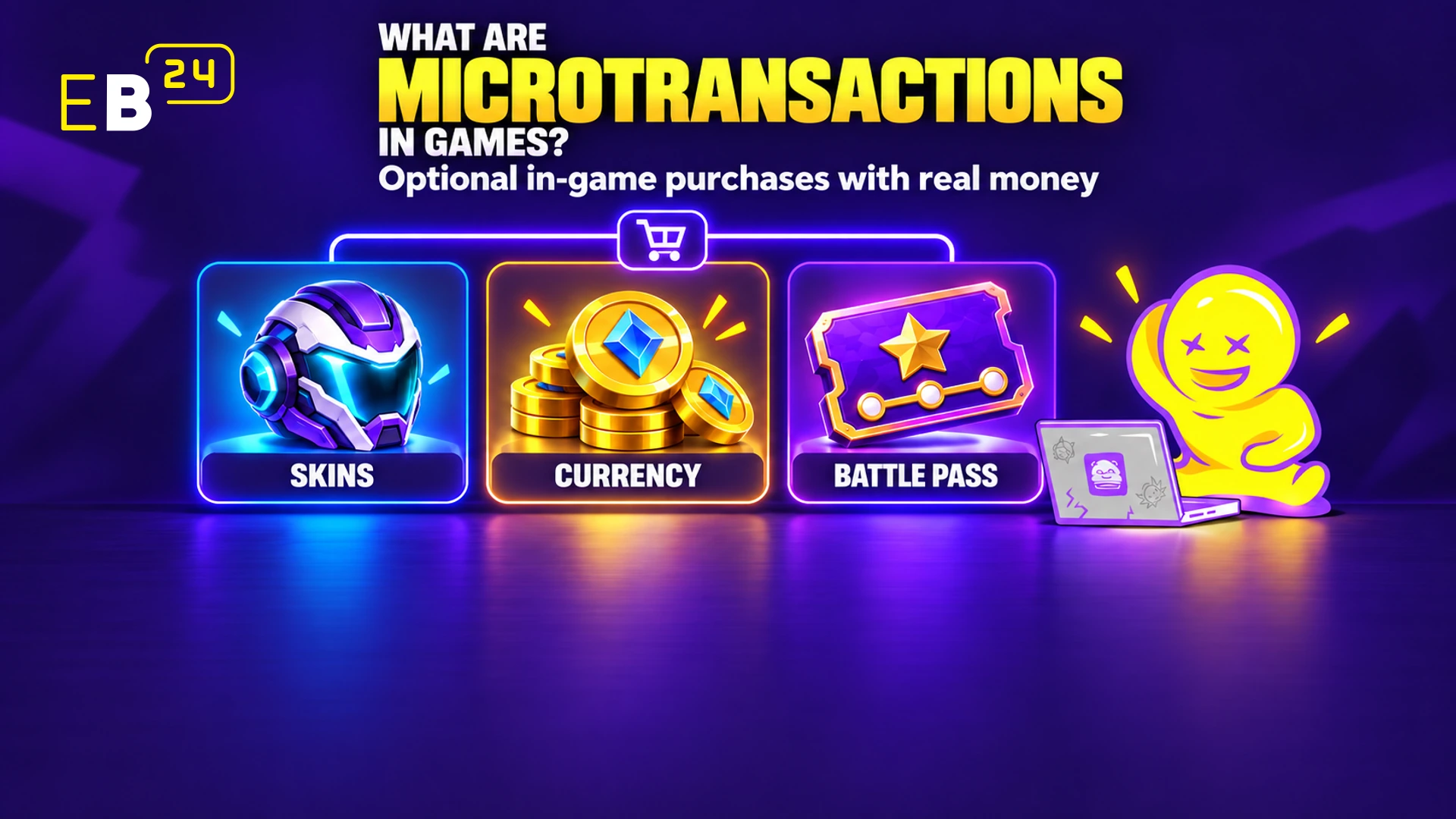
Microtransactions are small real-money purchases made inside a game, usually for cosmetics, currency, battle passes or convenience items. Often shortened to MTX, they replaced the single upfront price with an ongoing stream of optional spending, and they are now the financial backbone of free-to-play gaming.
Quick facts | |
|---|---|
Also known as | MTX, in-app purchases, IAP |
Typical price | $0.99 to $99.99 per transaction |
Usual currency | A premium in-game currency bought with real money |
Most common in | Free-to-play, live service and mobile titles |
Business model | Ongoing revenue instead of a one-time sale |
Main criticism | Pay to win mechanics and loot box gambling |
How microtransactions actually work
Almost no game sells items for real money directly. Instead you buy a premium currency, and the currency buys the item. Riot Points, V-Bucks, Robux and CoD Points all work the same way.
That extra layer is deliberate. Bundles rarely match item prices, so you end up with leftover currency and a small push to top up again. It also blurs the real cost. Nobody mentally converts 1350 RP back into money mid-purchase.
The five types you will run into
Cosmetic. Skins, emotes, ward skins, sprays. No effect on gameplay.
Convenience. XP boosts, inventory slots, faster progression. Buys time rather than power.
Progression. Battle passes and season passes, bought once then earned through play.
Randomised. Loot boxes, gacha pulls, capsules. Legally restricted in several countries.
Power. Stronger gear or characters sold directly. This is the pay to win end of the scale and the most disliked.
Why MTX took over
A $60 game earns $60 once. A free game with a healthy cosmetic shop earns indefinitely from a small fraction of its players. Industry data has consistently shown that a tiny percentage of spenders generate the majority of revenue, which is why so many games are designed around retaining the few rather than charging the many.
The upside for players is real: the base game costs nothing, and in a purely cosmetic economy your wallet never beats you in a fight. The downside is that skins, progression and randomised rewards are engineered to feel urgent.
Spending less on the same content
Most premium currencies cost less outside the in-game store. Our marketplace top-ups cover currencies across hundreds of titles at below storefront pricing, and game keys do the same for base games and DLC.
Frequently Asked Questions
Are microtransactions the same as pay to win?
No. Most MTX is cosmetic only. Pay to win is the narrower case where money buys actual in-game power.
Are loot boxes classed as gambling?
It depends on the country. Belgium and the Netherlands have restricted them, while most other markets regulate them as ordinary purchases.
Can you play a game fully without microtransactions?
Yes, in most major titles. Cosmetic-only economies like League of Legends or Valorant are completable without spending anything.
Βελτίωσε τις γνώσεις σου με αυτούς τους σχετικούς ορισμούς Γενικά:
Ορισμοί Γενικά