
TFT Set 17: Best Comps and Builds - Space Gods Meta Guide
 By Hollow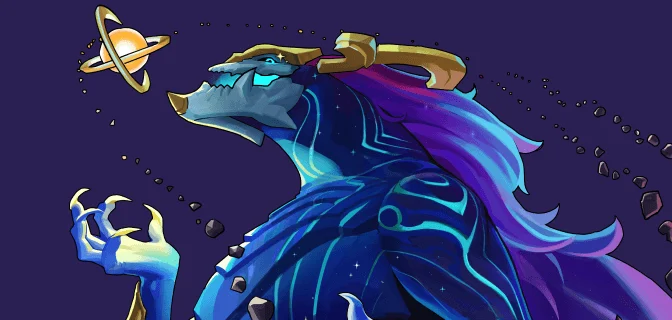
These are pre-PBE theoretical builds based on all available reveal information from Riot Games (updated March 29, 2026). Numbers, carries, and rankings WILL change as PBE testing runs April 1-15. We update this post daily with PBE findings so you know exactly what to play from day one on live servers (April 15). Bookmark this page.
Set 17: Space Gods launches on PBE April 1 and hits live servers April 15, 2026. Before ranked even opens, you have two weeks of PBE to get ahead of everyone else. This guide gives you a head start: the 5 comps that players and analysts have already identified as the strongest archetypes based on the full Set 17 reveal.
We do not guess. Every comp in this guide is grounded in the actual traits, champions, breakpoints, and interactions that Riot has confirmed. Some numbers will shift during PBE, some carries will be nerfed or buffed, and we will update this guide to reflect that in real time. But the core strategic identities of these comps - the reasons they work - will stay relevant throughout the entire set.
Use this guide to pick 1-2 comps that match your playstyle, understand why they work, and be ready to execute from game one of PBE. By the time April 15 arrives you will be miles ahead of players who are figuring things out for the first time.
Update Log
This section tracks every significant update to this guide. Most recent changes appear first.
[March 30, 2026] Initial guide published. 10 comps identified from pre-PBE reveal data.
Next update: April 1, 2026 - PBE Day 1 findings.
State of the Pre-PBE Meta
This pre-PBE analysis identifies five meta comps as A-tier rather than declaring a clear S-tier. This is actually a healthy sign. It suggests that no single comp is so obviously broken that it crushes everything else on paper - and that the real meta will emerge from PBE testing rather than being predetermined.
What we do know from the reveal is that Set 17 rewards vertical trait investment in some comps (Dark Star, Space Groove, Meeple) while also offering strong flex Fast 9 strategies that field the best 5-cost units regardless of trait synergy. The new Realm of the Gods mechanic - which god boon you choose - will influence which comp style is strongest in any given game.
The 10 comps split into three broad playstyle categories:
Reroll comps (Level 6-7, slow roll for 3-stars): Timebreakers, Redeemer, Anima
Fast 8 comps (level aggressively to 8): Space Groove, Mecha, Shepherd, Meeple, Dark Star
Fast 9 comps (push to 9 for 5-cost access): Psionic, Fast 9
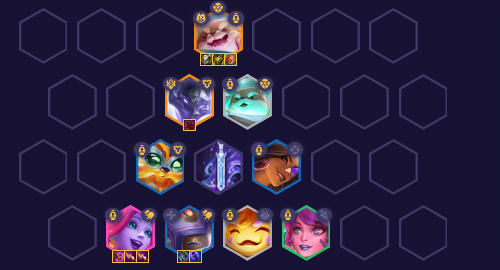
1. Space Groove - Blitzcrank, Nami, Shen
Leveling strategy: Fast 8
Difficulty: Medium
Primary carry: Nami (AP), Blitzcrank (frontline disruptor), Shen (relic anchor)
Core units: Blitzcrank - Nami - Ornn - Nasus - Gwen - Samira - Shen - Teemo
Space Groove is built around a deceptively simple mechanic: the longer your fights last, the stronger your entire team gets. Every second in The Groove grants +3% stacking Attack Damage and Ability Power to all Groovians. With (5) Space Groove active, this stacking begins immediately at combat start. By the time fights reach 8-10 seconds, your units are hitting 20-30% bonus AD and AP on top of their base stats.
The comp-s secret weapon is Blitzcrank. His Party Animal trait makes him untargetable below 45% HP and heals him back to full - if he reaches full health he enters The Groove himself and fires his passive bolts four times as fast. His Rocket Grab also pulls the enemy-s farthest unit (usually their carry) directly into your frontline. Opponents who build fragile backlines lose instantly to this hook.
Nami with AP items functions as the primary damage dealer in this comp - her abilities echoing via Replicator and Groove stacking make her output scale non-linearly. Shen-s Bulwark relic provides adjacent units with a 18% HP shield and 20% Attack Speed at the start of every fight.
Frontline items: Gargoyle Stoneplate + Warmog-s Armor + Steadfast Hammer (Blitzcrank)
Carry items: Jeweled Gauntlet + Nashor-s Tooth x2 (Nami)
Shen items: Thief-s Gloves
Tip: Build your Space Groove frontline around prolonged fights. Stack healing and shielding items on Ornn and Nasus so they survive long enough for Groove stacking to pay off. Blitzcrank-s Rocket Grab positioning is critical - place him where his hook will always reach the enemy carry.
Note: Space Groove loses badly to burst-heavy comps that end fights in 3-4 seconds. If the lobby is full of Mecha and Dark Star players, consider pivoting to a different comp. Your Groove stacks need TIME to matter.
2. Mecha - Aurelion Sol, The Mighty Mech, Urgot
Leveling strategy: Fast 8
Difficulty: Medium
Primary carry: Aurelion Sol (AP mage carry), Bard (support mage)
Core units: Bard - Aurelion Sol - The Mighty Mech - Urgot - Morgana - Rammus - Meepsie
Mecha is Set 17-s transformation comp and one of its most visually spectacular. Every Mecha unit has an innate ability to transform into their Ultimate Form, gaining +60% bonus Health and an upgraded ability - at the cost of taking up two board slots. The strategic tension of Mecha is managing this slot cost against the raw power gain.
The primary carry is Aurelion Sol. In transformed Mecha form, he gains +60% HP AND an upgraded AoE star-breath ability. Channeler-s 20% bonus mana from all sources means he casts constantly. Mecha Energy Cells at (3) and (4) add +20-35% AP on top. Bard as a support Channeler with AP items further accelerates Aurelion Sol-s cast rate through the Mana Regen trait bonus.
Urgot as a second Mecha transformation (Mecha + Brawler + Marauder) creates an effectively unkillable frontline. His Brawler HP scaling combined with the +60% Mecha transformation HP makes him the most durable frontline unit in the set when transformed. The Mighty Mech provides Voyager damage amp for your backline damage dealers.
Important board note: running two transformed Mechas (Aurelion Sol and Urgot) costs you 4 board slots total. Plan your level 8 board to accommodate this. At (6) Mecha you gain +1 maximum team size, partially compensating for the slot tax.
Aurelion Sol items: Nashor-s Tooth x2 + Jeweled Gauntlet
Bard items: Spear of Shojin + Voidstaff + Morellonomicon
The Mighty Mech items: Spirit Visage + Dragon-s Claw + Bramble Vest
Urgot items: Thief-s Gloves
Tip: When building Mecha, always Aurelion Sol before Urgot when it comes to transformation. Sol-s damage output in transformed form is what closes games. Urgot is your tankline - he is fine at 1-star as long as he is transformed and doing his frontline job.
Note: Mecha loses to hard interrupt comps with Blitzcrank hooks. If the enemy pulls your Aurelion Sol into their frontline before he can cast, you lose the fight immediately. Position Sol in the back row and keep Urgot as your front corner.
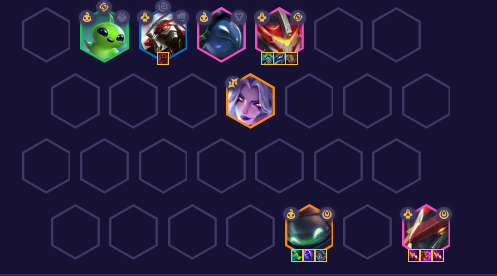
3. Shepherd - LeBlanc, The Mighty Mech, Sona
Leveling strategy: Fast 8
Difficulty: Medium
Primary carry: LeBlanc (AP burst), Bia and Bayin (summoned duo)
Core units: Sona - LeBlanc - The Mighty Mech - Morgana - Leona - Illaoi - Meepsie - Lissandra - Teemo
Shepherd is Set 17-s summoning comp and one of the most unique playstyles in the meta. Instead of carrying with a single premium unit, you build a board that summons Bia and Bayin - a mother-daughter duo who fight alongside you as additional units. Their power scales with a mechanic unique to Set 17: the total star level of all your Shepherd units combined.
This creates a comp-building puzzle unlike anything in recent TFT history. You want high total star levels on cheap Shepherd units. A 3-star Teemo contributes 3 star levels. A 3-star Meepsie contributes 3. A 3-star Sona contributes 3. Combined, that is 9 star levels powering Bia and Bayin even before you account for Illaoi, LeBlanc, and Lissandra. The more Shepherd units you 3-star, the stronger your summons become.
LeBlanc is the primary damage dealer among your purchasable units. Her Arbiter activation provides divine law bonuses and Shepherd contribution. The Mighty Mech provides Voyager Damage Amp for LeBlanc while tanking the frontline in transformed form. Sona generates Command Mods, Psionic items, and Shepherd star levels all at once.
At (5) Shepherd you summon both Bia AND Bayin, and at (7) their bond deepens into what testers report is a significant power spike.
LeBlanc items: Nashor-s Tooth x2 + Jeweled Gauntlet
Sona items: Morellonomicon + Voidstaff + Archangel-s Staff
The Mighty Mech items: Spirit Visage + Steadfast Hammer + Bramble Vest
Leona items: Shepherd Emblem (if available)
Tip: The key to Shepherd is prioritizing 3-starring your cheap Shepherd units (Teemo at 1g, Meepsie at 4g) over everything else. Each 3-star adds 3 star levels to Bia and Bayin-s power. A comp with multiple 3-star Shepherds at level 7 can surprise level 9 Fast 9 players through sheer summon strength.
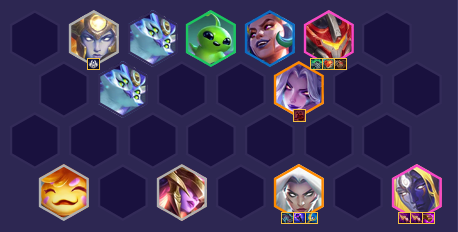
4. Meeple - Bard, Corki, Rammus
Leveling strategy: Fast 8
Difficulty: Medium
Primary carry: Bard (AP mage), Corki (marksman)
Core units: Bard - Corki - Rammus - Fizz - Veigar - Lulu - Poppy - Gnar - Meepsie
Meeple (the Astronaut trait renamed and reworked for Set 17) is a vertical trait comp that scales into the late game through its unique cloning mechanic. At (7) Meeple, you unlock a Cloning Slot on your bench - place any champion there and after a number of rounds equal to their cost, you receive gold and a 1-star copy. This is effectively a free champion every few rounds that compounds into significant board advantage.
The comp-s early game revolves around finding Bard as the primary mana-engine AP carry (Channeler bonus gives him 20% extra mana from all sources) and Rammus as the tanky Bastion frontline who taunts enemies into attacking him. Corki provides early Fateweaver crit synergy and becomes a secondary carry at 3-star.
Veigar is the combo piece that makes late-game Meeple terrifying. His AoE cage nuke firing twice via Replicator (4) at 50% strength is devastating against clustered enemy units. Meep empowerment from the Meeple trait adds additional random effects to his ability on top of the echo. At (10) Meeple you summon the legendary Four Meeplords - one of the most powerful endgame states in the set.
Bard items: Spear of Shojin + Voidstaff + Morellonomicon
Corki items: Nashor-s Tooth x2 + Jeweled Gauntlet (if AP) OR Guinsoo-s + Runaan-s + Last Whisper (if AD)
Rammus items: Gargoyle Stoneplate + Sunfire Cape + Spirit Visage
Tip: When you hit (7) Meeple and unlock the Cloning Slot, always put your most expensive unit in it. The 5-cost Cloning Slot generates gold and a free 5-cost 1-star after completing. Over several rounds this is equivalent to a free item-worth of economic advantage.
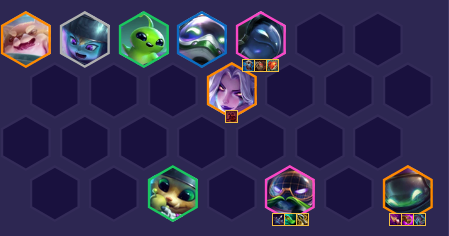
5. Dark Star - Jhin, Karma, Nunu
Leveling strategy: Fast 8
Difficulty: Medium
Primary carry: Jhin (primary carry - the best carry in Set 17)
Core units: Jhin - Karma - Nunu - Cho-Gath - Lissandra - Mordekaiser - Kai-Sa - Blitzcrank
Dark Star is theoretically the strongest trait in Set 17 and Jhin is theoretically the strongest carry. Dark Star creates Black Holes that instantly execute enemies who fall below 10% max Health - closing fights that other comps would draw out. At (6), the strongest Dark Star unit goes supermassive gaining 100% effectiveness from all Dark Star bonuses. At (9), all Dark Stars are supermassive. At level 10: consume everyone.
Jhin benefits from three simultaneous damage amplifiers that stack multiplicatively: Dark Star execute (Black Hole at 10% HP), Eradicator (Jhin-s unique trait reducing all enemy Armor and MR by 14%), and Sniper (Damage Amp increasing with distance from target). Position Jhin in the absolute farthest corner from the enemy team. Every hex of distance adds Sniper amplification.
Karma as a Voyager and Dark Star support unit gives your entire team a 15-second shield at combat start via Voyager while also contributing to the Dark Star trait count. Nunu as a Stargazer and Vanguard frontline in an empowered constellation hex adds Bastion-like resistance stacking while advancing Dark Star toward the (6) supermassive threshold.
Why is Dark Star rated A-tier rather than S? Because it depends entirely on finding Jhin at 2-star. A 1-star Jhin cannot carry the same way. Until you hit Jhin 2-star your board is carried by Kai-Sa and Karma, which is functional but not dominant. The power spike when Jhin 2-star comes online is one of the most dramatic in the set.
Jhin items: Infinity Edge + Last Whisper + Deathblade
Nunu items: Gargoyle Stoneplate + Dragon-s Claw + Sunfire Cape
Karma items: Chalice of Power + Zeke-s Herald
Blitzcrank items: Warmog-s Armor + Steadfast Hammer + Gargoyle Stoneplate
Tip: In Dark Star comps, position Jhin last every combat round. See exactly where the enemy carry is positioned, then place Jhin in the corner maximally far from it. The Sniper Damage Amp from hex distance is meaningful - 3-4 hexes of extra distance can be 15-20% more damage per shot.
Note: Dark Star is the most contested comp in lobbies where the reveal is understood. If two other players are building Dark Star, the competition for Jhin, Karma, and Cho-Gath in the shop will weaken all three boards. Check your lobby at 1-3 and pivot if you see multiple players holding Dark Star units.
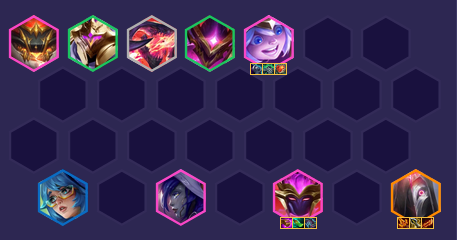
Which Comp Should You Play?
If you want to be ahead of everyone on day one of live servers: Space Groove. Both are Fast 8 comps with strong early-to-late transitions and carries (Blitzcrank, Aurelion Sol) that are less likely to be contested compared to Jhin or Fiora.
If you want the highest individual comp ceiling when executed perfectly: Dark Star Jhin. The most satisfying comp to pilot and the most powerful when it comes together. Learn it during PBE and you will have a significant advantage on April 15.
Whatever you choose: bookmark this page. We update it daily during PBE (April 1-15) with every significant balance change, newly discovered broken comp, and carry adjustment. Check back every day before your sessions to know what changed overnight.
More TFT Set 17 Guides
Realm of the Gods Mechanic Guide
Climb Faster with EB24
The first two weeks of a new TFT set are always the most competitive. Players who understand the meta early gain a massive LP advantage, while everyone else is still experimenting and making mistakes.
If you don’t have time to test comps on PBE or grind ranked from day one, a lot of players choose to speed things up with platforms like EB24. Whether it’s climbing divisions, improving consistency, or just avoiding the frustration of early-set chaos, having the right support can make a noticeable difference.
Some players focus on fast rank progression through TFT Division Boost, while others prefer a more controlled climb using TFT Net Win Boost to maintain a steady win rate. If you're starting fresh, TFT Placement Games services can help you land in a much better position right from the beginning.
For players who actually want to improve (not just gain LP), TFT Coaching is often the best option, especially early in the set when understanding meta fundamentals matters the most.
And if you're looking for flexibility, the TFT Marketplace allows you to choose exactly what fits your needs, including more niche services like GGirls TFT Services. Early-set climbing is where the biggest LP gains happen - if you fall behind here, catching up later becomes significantly harder.
You might also like