





Valorant Ranks - ranking system and distribution explained by EB24
Valorant Rank System Explained: How it Works
How do Valorant ranks work? Our article on "how do ranks work in Valorant" will share everything you need to know about the game's distribution and ranking system. First, what you need to know about Valorant and its competitive play mode depends on how well you play.
What is Valorant Competitive Mode?
If you're unfamiliar with the game, Valorant is a free-to-play, highly competitive first-person tactical shooter that's taken the gaming world by storm since Riot introduced it to the public in 2020. Players build up their Valorant agents with unique abilities and tactical gameplay in a multiplayer experience where it's team vs. team. Casual gamers usually play with friends, while competitive players aim for the highest Valorant rank they can possibly get.
If you're among those who want to climb Valorant's ranking system through competitive mode, you'll join four other players in a team against another team of five to see who shall prevail. However, before you go there, you'll need to reach Level 20 through placement matches first. Once you've completed this task, you'll be able to progress through the ranks in the quest to reach the highest rank in Valorant.
Why Placement Match Requirements Before Competitive Play
Why do you need to play the placement matches required before you can climb through the Valorant rank list? This is Riot's way of ensuring you understand the game before venturing into the official Valorant ranked matches in competitive mode. Again, you are required to reach level 20 before you can compete in the competitive ranks.
Placement matches are essential. If you want better details on how placement matches work, check out our Valorant blog "How Do Valorant Placements Work."
Valorant Ranks Explained (From Iron to Radiant)
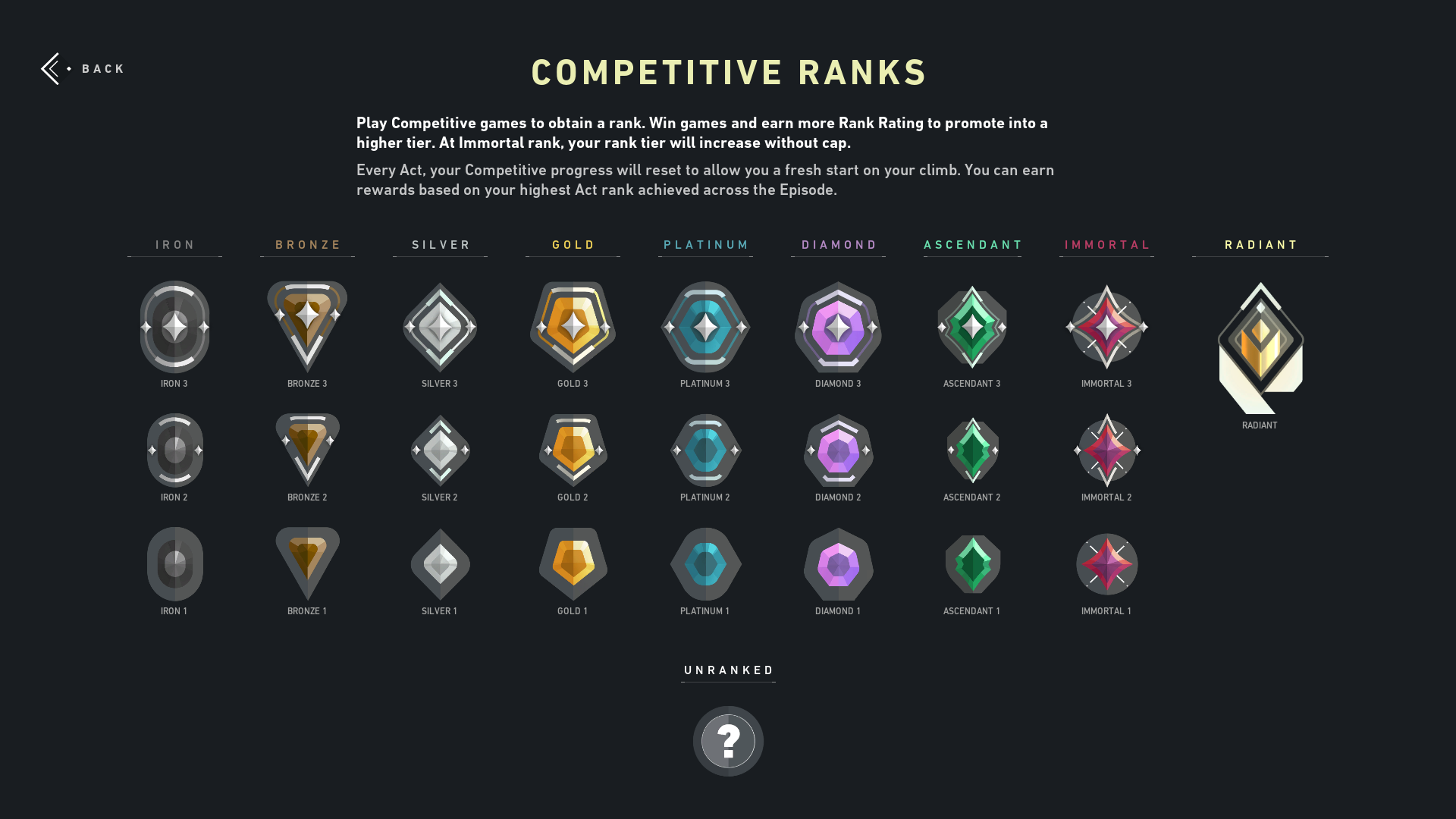
What are the Valorant ranks, and how many are there? There are nine ranks in total to climb the Valorant tier list. Except for Radiant, every rank in Valorant uses an MMR (matchmaking rating) system divided into three tiers. The current Valorant rank distribution uses this method for players to tier up within each level. From the lowest rank of Iron to the higher rank of Immortal, you climb the ranks in a 1-2-3 format. All Valorant ranks in order are:
Iron (1-2-3)
Bronze (1-2-3)
Silver (1-2-3)
Gold (1-2-3)
Platinum (1-2-3)
Diamond (1-2-3)
Ascendant (1-2-3)
Immortal (1-2-3)
What you need to know about Valorant Rank placement is the progression process. That means that all the ranks from Iron through to Ascendant in Valorant start at 1. You work your way to 3 until advancing to the next level. It seems easy enough from Iron through Ascendant, but once you join the Immortal and Radiant players, this is where the system takes MMR in Valorant down a different path.
Your ability to achieve all ranks in Valorant depends on your Rank Rating Points (RR). These are achieved according to gameplay performance. The more skilled you are as you play Valorant, the more effectively you'll climb the different ranks to see how high you can go. Who knows? Maybe you have what it takes to rise above the average player pool into the immortal and radiant ranks with an incredible win rate.

How the Ranking System Works in Radiant
While all the ranks in Valorant use a 1-2-3 progression system from Iron to Immortal, Radiant does things differently. It doesn't follow the same rank tier system. This is where you'll find most professional Valorant players. They possess incredible skill unmatched by players found in the lower rank tier levels. Also, they need to play with pure dedication in competitive mode in Valorant if they expect to stay ahead of the competition.
Do you want to learn more about how things work between the Immortal ranks and Radiant? Click THIS LINK for valuable, in-depth knowledge.
What is Valorant Act Rank?
Just like all Valorant ranks follow their pattern during competitive gameplay, so is the case with the game's Acts. From Act 1 to Act 6, players compete within their designated Season for limited-time rewards. Each Act typically lasts for two months.
How Does the Act Valorant Rank Distribution Work?
Once a season opens with Act 1, players need to play five placement matches to determine their current rank. As for Acts 2 and 3, they only need to play 1 placement match. Then, in Act 4, it's back to five matches again.
A player's Act Rank features a badge that's filled with triangles. Each one represents a ranked match win, as well as the highest rank in Valorant you've achieved (found in the top triangle). Now, your Act Rank may increase or decrease according to your match outcomes. Every Valorant rank in the Acts, from lowest to highest, is calculated the same as the game's overall competitive progress.
Mastering the Valorant Rank System
Even the pro-level Valorant players got their start from the bottom. They climbed through all the different Valorant ranks just like everyone else. If you're an "average Joe" stuck in the lower ranks and not enough wins are coming your way, you might want to consider Valorant boosting or coaching as a means to improve your game. However, should you choose to do so, be mindful of whom you wish to share your Valorant gameplay journey with.
EB24's team has fantastic boosters and coaches, as well as a great marketplace featuring Valorant, ranked-ready accounts. This is also a great go-to for players wishing to sell their accounts
You might also like