



Red Side vs Blue Side in LoL


Red Side vs Blue Side in LoL: Win Rate, Draft and Why Blue Wins More
Summoner's Rift is a symmetrical map with an asymmetrical win rate. Blue Side comes out ahead season after season, patch after patch, in solo queue and in professional play, and the gap is wide enough that pro teams treat side selection as a real prize in a series.
Here is where the advantage actually comes from, how big it is, and what to do about it when the ladder puts you on the wrong side.
How big is the blue side vs red side win rate gap?
In ranked solo queue the difference reported by tracking sites is small, usually a point or two above even, and it grows as you climb. In professional play the gap is much larger, because draft is executed properly and a first pick advantage compounds into a real lead before anyone loads into the game.
Level of play | Blue Side edge | Why the gap changes |
|---|---|---|
Iron to Gold | Barely measurable | Individual mistakes outweigh anything draft provides |
Platinum to Diamond | Small but consistent | Players start punishing bad matchups |
Master and above | Clearly visible | Draft is played to win, first pick is used correctly |
Professional play | Largest gap | Full bans, prepared comps, scouting |
The pattern tells you everything: the advantage is a draft advantage, and it only pays out when someone knows how to spend it.
Why is blue side better in LoL?
First pick. Blue Side takes the first champion off the board. In a patch with one clearly overtuned pick that alone can decide the game, and in every patch it means the strongest champion in the meta never plays against you.
Familiar perspective. Every player learns the map from the blue orientation in tutorials, guides and replays. Blue lanes look normal, red lanes look mirrored, and small habits like flash directions and skillshot angles carry a fraction of the muscle memory over.
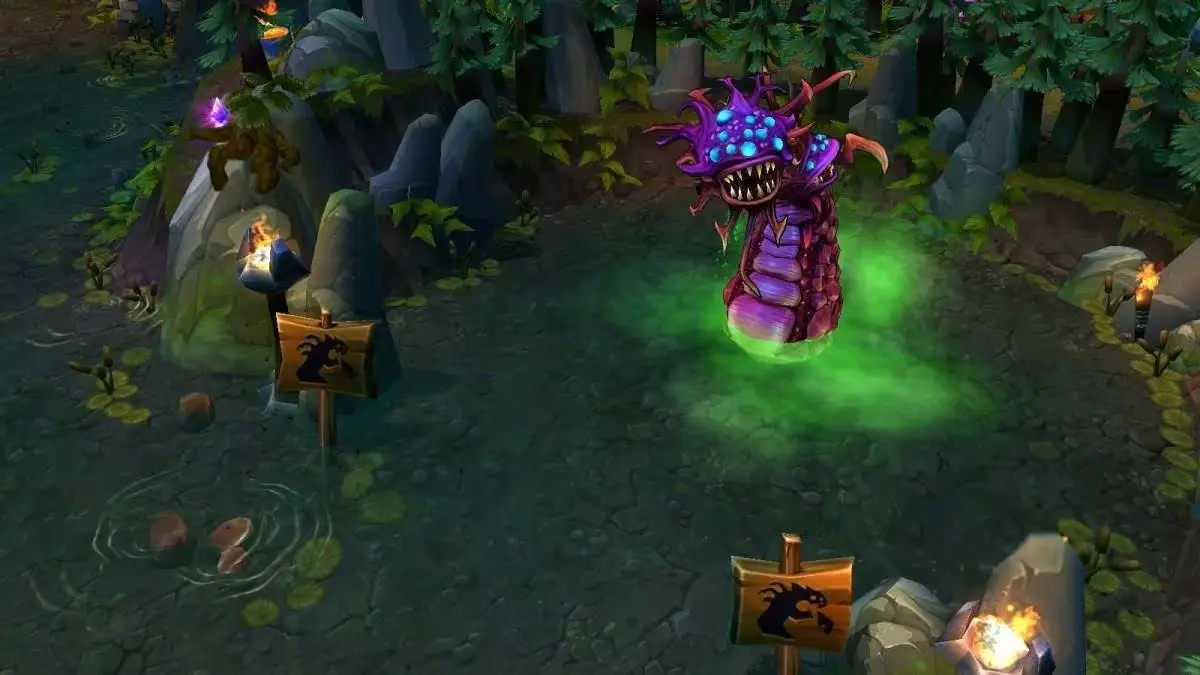
Map asymmetry. The brush and wall layout around each half of the river is not a perfect mirror, so warding angles into the objective pits and jungle pathing between camps play out slightly differently depending on which base you came from.
None of these is dramatic alone. Stacked across hundreds of games, they are the difference between a ladder that trends up and one that does not, which is exactly the margin that keeps a hardstuck account in place.
What does red side get in return?
Counterpick. Red Side drafts last, so it sees four of the enemy picks before locking its final champion and can answer the lane that matters most. In a meta with no single broken pick, that trade is close to even, and a Red Side team that saves a flexible champion for the end can win champion select outright.
The catch is that counterpicking requires knowledge. You need to know which matchups are actually lopsided, and most players below Diamond do not, so the last pick gets spent on comfort instead. That is precisely why the win rate gap widens with rank: Blue Side's advantage is automatic, Red Side's has to be earned.
How to play each side
On Blue Side, treat first pick as a resource. Lock a champion that is either genuinely the best in the patch or flexible enough to hide your role, and never spend it on something that can be hard countered in one click.
On Red Side, hold your flex pick until last. Ask your team to declare comfort picks early so the final slot stays open, and use it on whichever lane has the worst matchup on paper rather than defaulting to top.
On either side, take the vision differences seriously. Learn which brush covers the objective pits from your base's orientation, because setting up a drake or Baron fight starts with a ward placed two minutes early.
The full breakdown of the map position, the draft order and the base layout sits in our definition of Blue Side in League of Legends.
Does side selection actually stop you from climbing?
Over a long enough sample, no. Side assignment is random in solo queue, so it evens out and cannot be the reason an account sits in the same division for months. Over fifty games it absolutely can flavour a stretch of the ladder, which is why a losing week is not always a skill problem.
What does stop climbs is everything the side advantage sits on top of: coin flip drafts, autofilled roles and games decided in champion select. If your account is stuck below where you actually play, a League of Legends division boost or a full seasonal boosting package clears the stretch where variance matters most, and apex accounts push the last distance with Master to Challenger boosting.
FAQ
Can you pick your side in ranked LoL? No. Sides are assigned randomly in solo queue and only chosen in custom games, tournament draft and Clash, where the higher seed usually decides.
Is red side harder in League of Legends? It depends. Red Side wins slightly less often overall, but a team that uses the counterpick properly gives up very little, which is why the gap is smallest among the best drafters.
Which side is better for jungle? Neither by design. The clear routes mirror each other, but the first clear ends in a different position relative to the enemy jungler, so most players develop a preferred side out of habit rather than advantage.
Może ci się też spodobać