



What Does RNG Mean in Gaming?
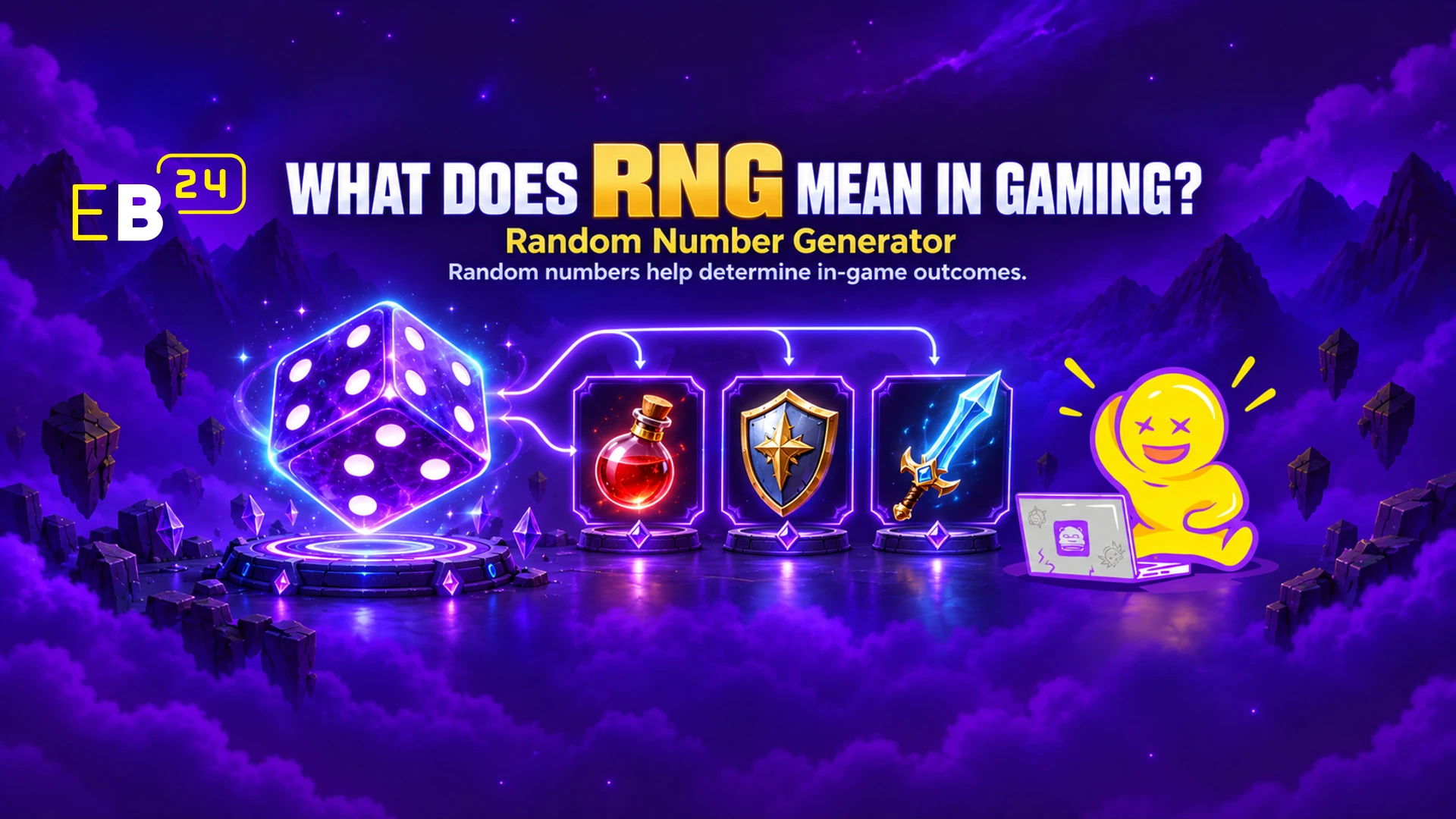
RNG stands for Random Number Generator, the system that decides any outcome a game leaves to chance. Critical hits, loot drops, gacha pulls, card draws and enemy spawns all run on it, and players use the term as both an explanation and an excuse.
Quick facts | |
|---|---|
Stands for | Random Number Generator |
Controls | Crits, drops, spawns, card draws, gacha pulls |
True randomness | No, it is pseudorandom and seed-driven |
Common complaint | Rigged RNG, almost never actually true |
Related terms | Drop rate, pity system, variance |
Heaviest users | Gacha games, roguelikes, ARPGs, card games |
How it actually works
Games do not generate real randomness. They use pseudorandom algorithms that take a seed value and produce a sequence that is statistically random but entirely deterministic given the same starting input.
In practice the game rolls a number inside a range and compares it to a threshold. A 25 percent crit chance means a roll under 0.25 crits. That is the whole mechanism.
Some systems add weighting on top. Dota 2 uses pseudo-random distribution so that consecutive procs become less likely and dry streaks become more likely, which produces something that feels fairer than true randomness even though it is mathematically less random.
Why RNG feels rigged when it is not
Human intuition expects randomness to look even. It does not. At a 10 percent drop rate, roughly 35 percent of players will still have nothing after ten attempts. That is correct behaviour, not a bug, and it is where most "rigged RNG" accusations come from.
The other factor is memory. Twenty failed rolls stick. The time it dropped first try does not.
Pity systems and why they exist
Most modern gacha and loot games now add a guarantee: a hard pity at a set number of pulls, a soft pity where rates climb, or a bad luck protection timer. These exist because raw RNG produces player experiences bad enough to lose the player entirely.
Where RNG becomes a wallet problem
Randomised rewards are the engine behind loot boxes and gacha, which is the most scrutinised branch of microtransactions. Chasing a specific drop through pure RNG is almost always more expensive than acquiring it directly.
Our marketplace covers items and accounts across gacha and loot-driven titles, so the result is fixed instead of rolled.
Frequently Asked Questions
Is RNG truly random?
No. It is pseudorandom, generated by an algorithm from a seed, though for gameplay purposes the distinction never matters.
Can RNG be rigged against individual players?
No evidence supports it in major titles. Rates are usually disclosed and audited in regulated markets.
What is a pity system?
It is a guarantee that caps how unlucky you can get, either by forcing a reward at a set count or by raising rates as failures pile up.
Improve your knowledge with these related General definitions:
General definitions